
Ness County Parole and Probation
Parole, postrelease supervision, and probation mark different legal paths. Parole is a discretionary release used mainly for eligible Kansas indeterminate or older-law sentences. The Kansas Prisoner Review Board decides parole matters. Postrelease supervision follows the prison part of an applicable determinate sentence. Probation is ordered by a judge instead of, or in connection with, confinement. A probation order and later revocation entries belong in the sentencing court file.
All three statuses place a person outside the completed institutional stay, but none means the record is finished. Supervision continues until the responsible authority enters discharge or another lawful end. A person released from Ness County Jail on bond may have an open case without being on probation. Someone transferred from the jail to the Kansas Department of Corrections, or KDOC, did not enter the community at that transfer point.
| Status | Who creates it | Best verification route |
|---|---|---|
| Parole | Kansas Prisoner Review Board for an eligible state sentence | KASPER, the Board, and the assigned parole office |
| Postrelease supervision | Kansas sentence law and KDOC after the prison term | KASPER and KDOC Parole Services |
| Probation | The sentencing court | Court docket, clerk, and the agency named in the order |
| Final discharge | The agency with authority over the sentence | A dated KDOC, Board, or court record |
Verify Ness County Supervision Records
Begin with the kind of case, not just the name. KASPER, the Kansas Adult Supervised Population Electronic Repository, covers people and cases associated with KDOC-operated or funded programs. It may show a state custody or supervision status. A short Ness County Sheriff booking that ended in bond may never appear there. For probation, the court order is more reliable because it identifies the sentence and should identify the supervising structure.
- Match the person. Search KASPER by KDOC number when known. Otherwise use the name, alias, date of birth, conviction county, and other available identifiers.
- Read the exact status. Note the office, date label, and whether the record concerns custody, parole, postrelease supervision, or another KDOC program.
- Check the court case. Use the Kansas courts public-access portal and select Ness County for the sentencing, probation, or revocation entries.
- Choose the right office. Call Dodge City Parole for a KDOC parole case. For probation, contact the clerk or the agency actually named by the court.
- Ask for the record. Request the releasable Board decision, KDOC release or supervision record, or probation order if the public view is not enough.
KASPER says its information and absconder data update each working day. Status may change before the next update. It also warns that community-corrections events after April 21, 2021 are not displayed during data modernization. A blank search therefore cannot establish that no probation exists.
Search results also need an identity check. KASPER offers name, alias, KDOC number, date of birth, conviction county, and parole county controls. A county field can describe the conviction or supervision assignment, not the place where the person now lives. Compare more than a shared name before contacting an office. If displayed data appears wrong, the KASPER disclaimer directs written corrections to KDOC at kdoc_pub@ks.gov. That correction route concerns the state display. It does not replace a request to the Ness County court for a probation order or to the Sheriff for a local release sheet.
For the custody event itself, use the Ness County released inmate search and record guide. A supervision record can support that institutional custody ended under conditions, but the Sheriff or KDOC release record supplies the actual departure event.
Note: Record the agency, date label, and access date so a later update can be compared accurately.
Ness County Parole Office Location
KDOC assigns Ness County parole supervision to the Dodge City Parole Office in its South region. The assigned office is not in Ness City. That detail matters when a state record names Ness as a conviction county but the person reports elsewhere. The office can verify a KDOC supervision assignment, explain the displayed status, and direct a caller to the correct staff contact. It should not be described as the county probation office.
Dodge City Parole Office
Address: 208 W Spruce, Dodge City, KS 67801
Phone: 620-225-1233
Coverage: KDOC parole supervision for Ness County
Automated parole reporting: 866-570-7225
The official KDOC parole office table is the source for Ness County coverage. The captured office page shows where a KDOC-linked Ness supervision question should be routed.
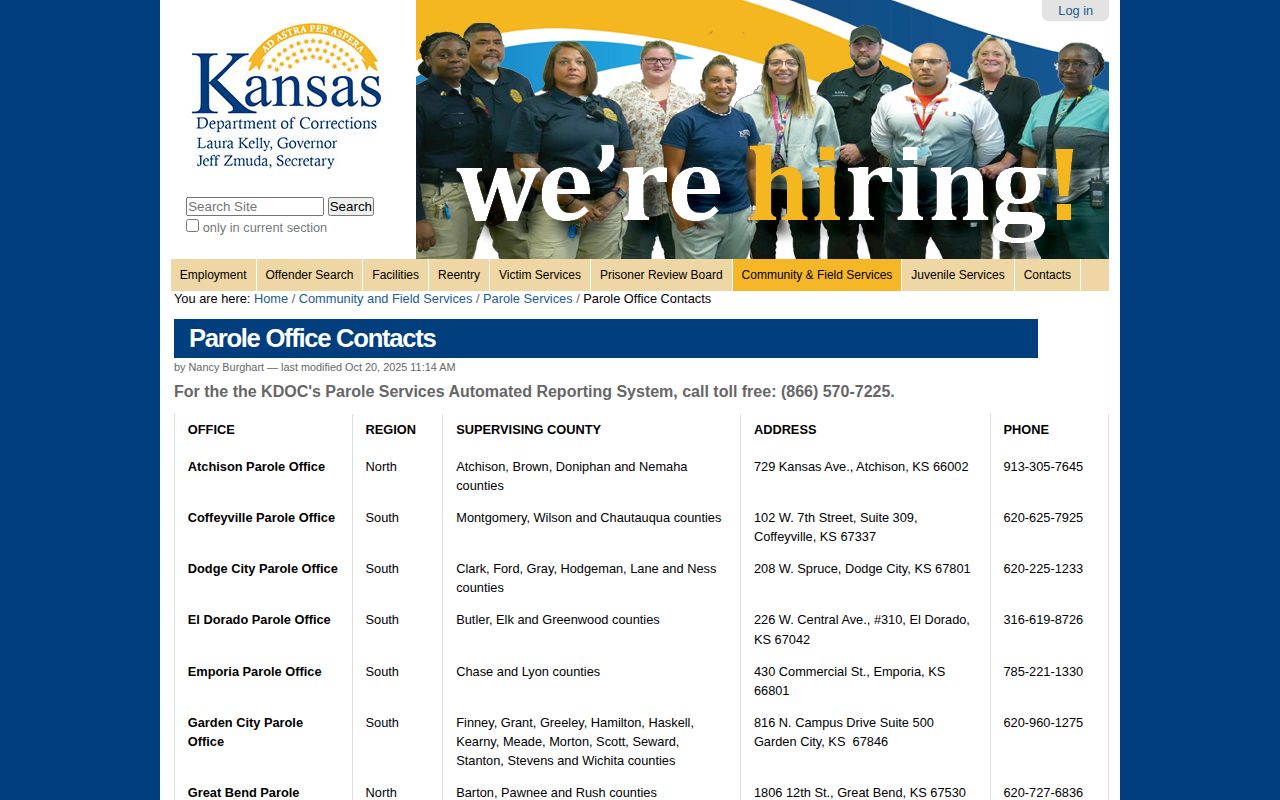
Use this listing to confirm the office before calling. Office assignment can differ from conviction county, intended return county, or the place where a person was once held.
Ness County Probation Order Checks
Ness County’s directory lists Court Services at 785-798-3695, with fax 785-798-3839. The county page does not define the office’s full caseload, publish an address for this entry, or establish that it supervises every probation case. Treat it as a local lead. Ask whether that office handles the named court case or whether the clerk can identify the agency stated in the probation order.
The Ness County District Court is the durable source for a state criminal case. A probation order can state the term, conditions, and supervising authority. Later docket entries may show modification, violation proceedings, revocation, or discharge. Do not infer the terms from a generic program description. The actual order controls, and some material may not be publicly releasable.
If no online document image is available, ask the clerk for the specific order rather than a broad case history. A court file answers whether probation was imposed and how the judge later acted. It does not establish the minute jail processing ended, so a local physical-release question still belongs with the Ness County Sheriff.
Ness County Supervision Absconder Checks
KASPER separates its parole absconder search from the community-corrections absconder search. Choose the page that matches the known status. Do not merge the lists or treat either one as a Ness County jail roster.
The official parole absconder screen is a supervision-warning channel.
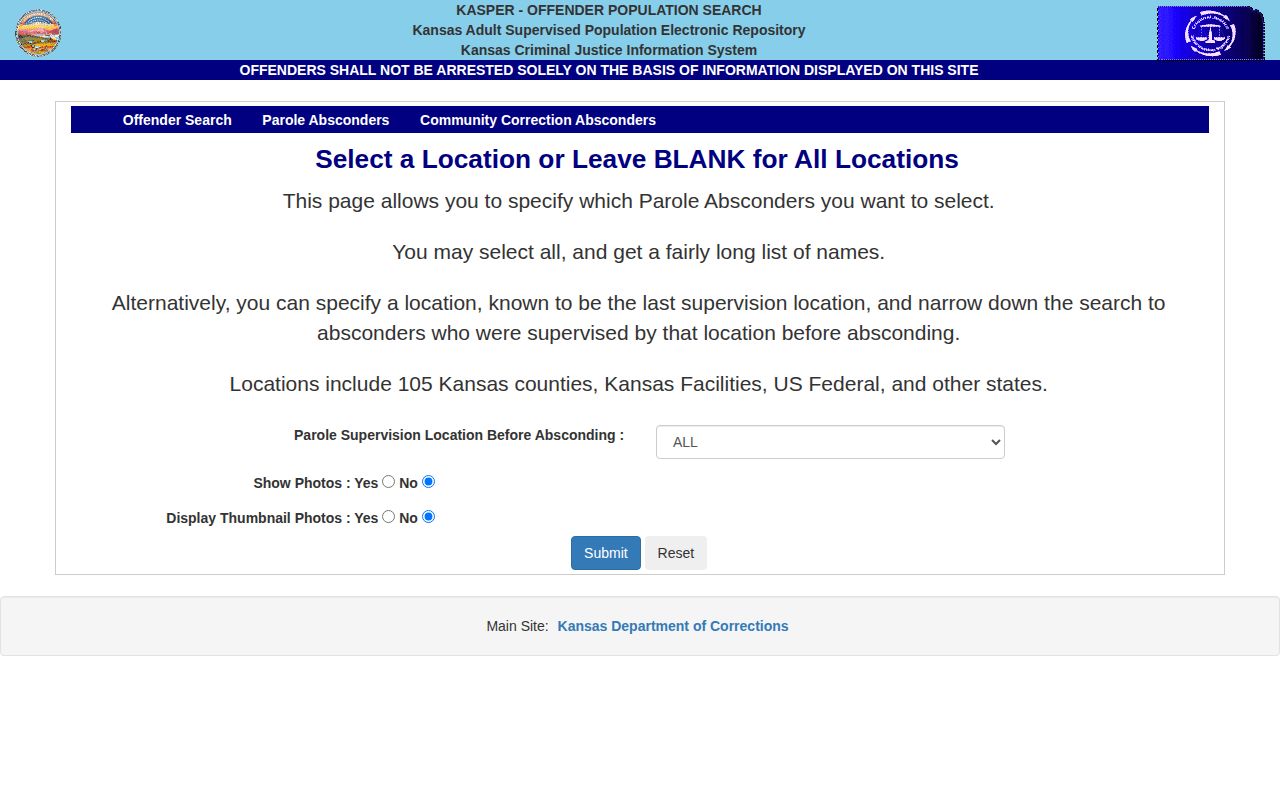
A listing means KDOC alleges that the person is unavailable or not compliant. It does not prove present custody, a new release, or a new conviction. Call the assigned office for current status. KDOC labels 785-414-7755 for Enforcement, Apprehensions, and Investigations in the KASPER disclaimer, while its contacts page separately labels 785-746-7620 as an Absconder Tips Hotline. Preserve those different purposes.
Note: A warning entry may remain visible until a working-day update reflects a later agency action.
Ness County Parole Hearing Milestones
The Prisoner Review Board calendar hub publishes monthly public-comment schedules and offender lists. These lists show a scheduled step. They are not decisions and do not prove release. The county shown can be the county of conviction, not the person’s home, release destination, or supervision office.
The monthly calendar is useful when a Ness conviction appears in the Board process.

Five milestones must stay separate: eligibility, a scheduled hearing, a favorable decision, an approved release plan, and actual release to supervision. Final discharge is a sixth, later event. The Board process page explains review and discretionary parole. K.S.A. 22-3717 governs eligibility and release through offense- and date-specific rules, so a homemade sentence fraction is not reliable.
No verified public person-level decision search was found. After a hearing, check KASPER following its working-day update. If the result remains unclear, ask the Prisoner Review Board for a releasable decision and ask KDOC whether actual release occurred. A grant can still precede planning, another hold, or a later change.
The Board is located at 714 SW Jackson, Suite 300, Topeka, KS 66603. KDOC lists the Board chair at 785-746-7516. A focused request should name the person, KDOC number if known, and hearing month. Ask for the releasable decision rather than assuming that the public schedule contains results. Once an outcome is known, the Dodge City office is relevant only if KDOC assigns the resulting Ness County supervision there.
Ness County Supervision Discharge Records
Supervision ends through a formal act, not merely because a date passes or a name disappears online. For a KDOC-linked person, ask for actual release status, the assigned supervision office, and final-discharge status. KDOC’s Records Division can route a focused records request. For probation, request the discharge, termination, or revocation order from the sentencing court.
A release to parole or postrelease supervision is not final discharge. The person has left institutional custody but remains subject to an agency’s authority. Likewise, an absconder entry does not restart a sentence by itself. The office and the later record show what action occurred.
When a source conflicts with another, compare dates and scopes. A Board list may predate the hearing. KASPER may await its next working-day update. A court order may address probation but not KDOC parole. Ask the office that created each record to explain its own entry, then use the dated discharge record as the strongest proof that supervision ended.